Article
2nd Place in IEEE Low Power Computer Vision Challenge 2026 Track 2 at CVPR 2026 Workshop
Overview
This project note records our result in the 2026 IEEE Low Power Computer Vision Challenge (LPCVC), held as part of the Efficient Deep Learning for Computer Vision workshop at CVPR 2026.
In the Action Recognition in Video track, our team TEAM-ALPHA placed 2nd.
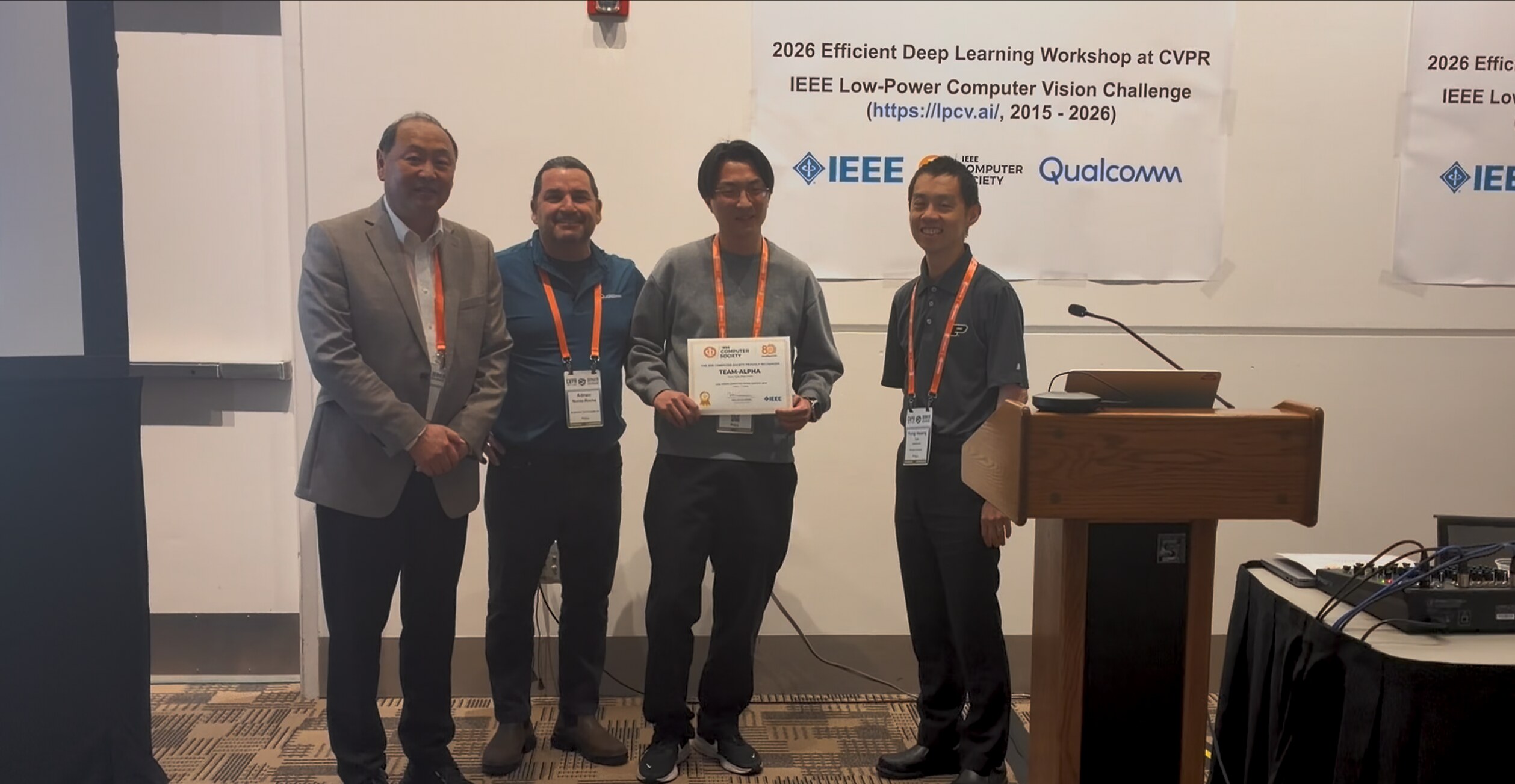
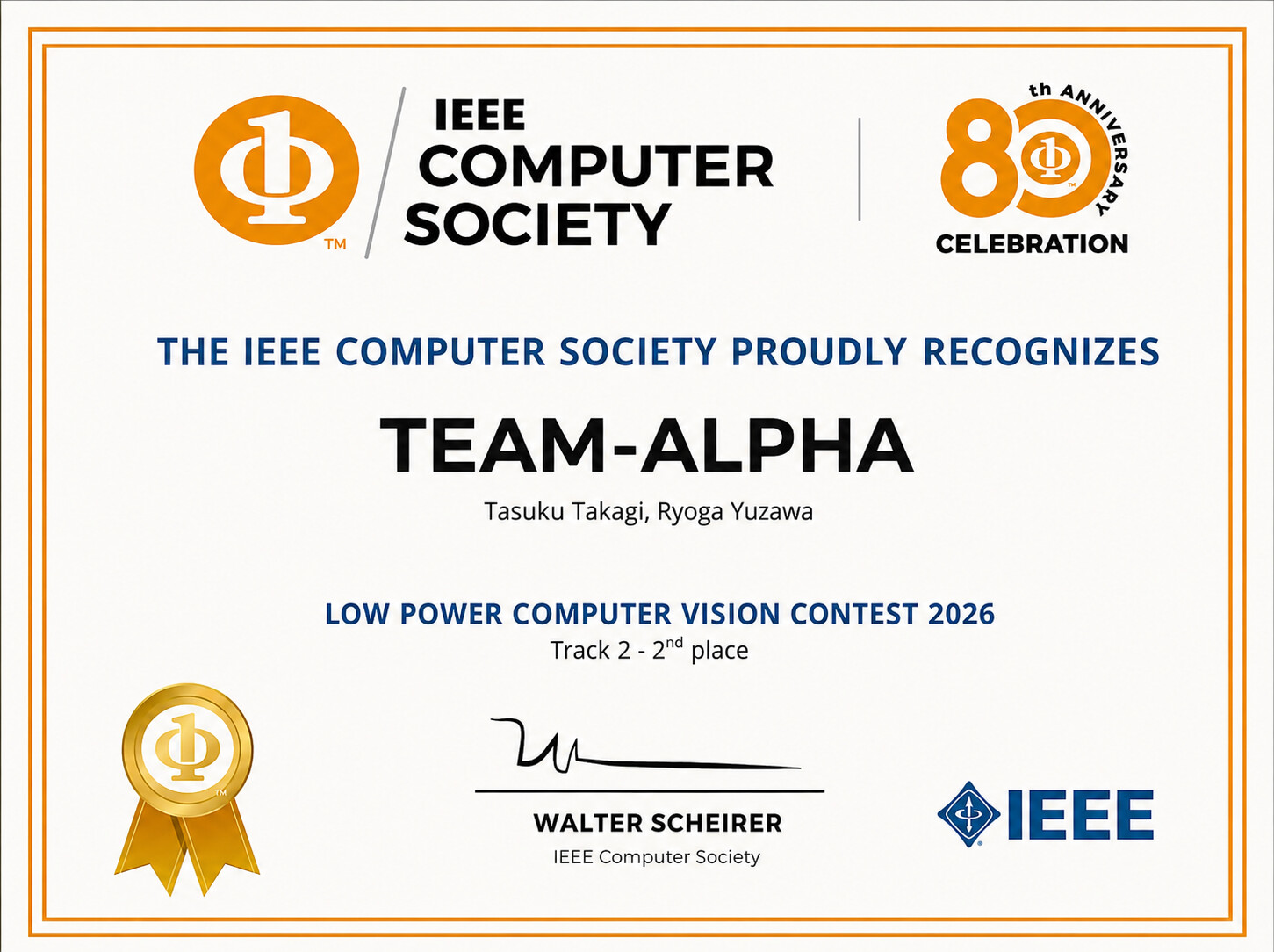
The submitted model was evaluated on the Qualcomm Dragonwing IQ-9075 EVK through Qualcomm AI Hub.
 Credit: Qualcomm
- Model: DecomposedVideoMAE (ViT-B, 112px, float)
- Latency: 19.322 ms on Dragonwing IQ-9075 EVK
- LB Accuracy: 96.776%
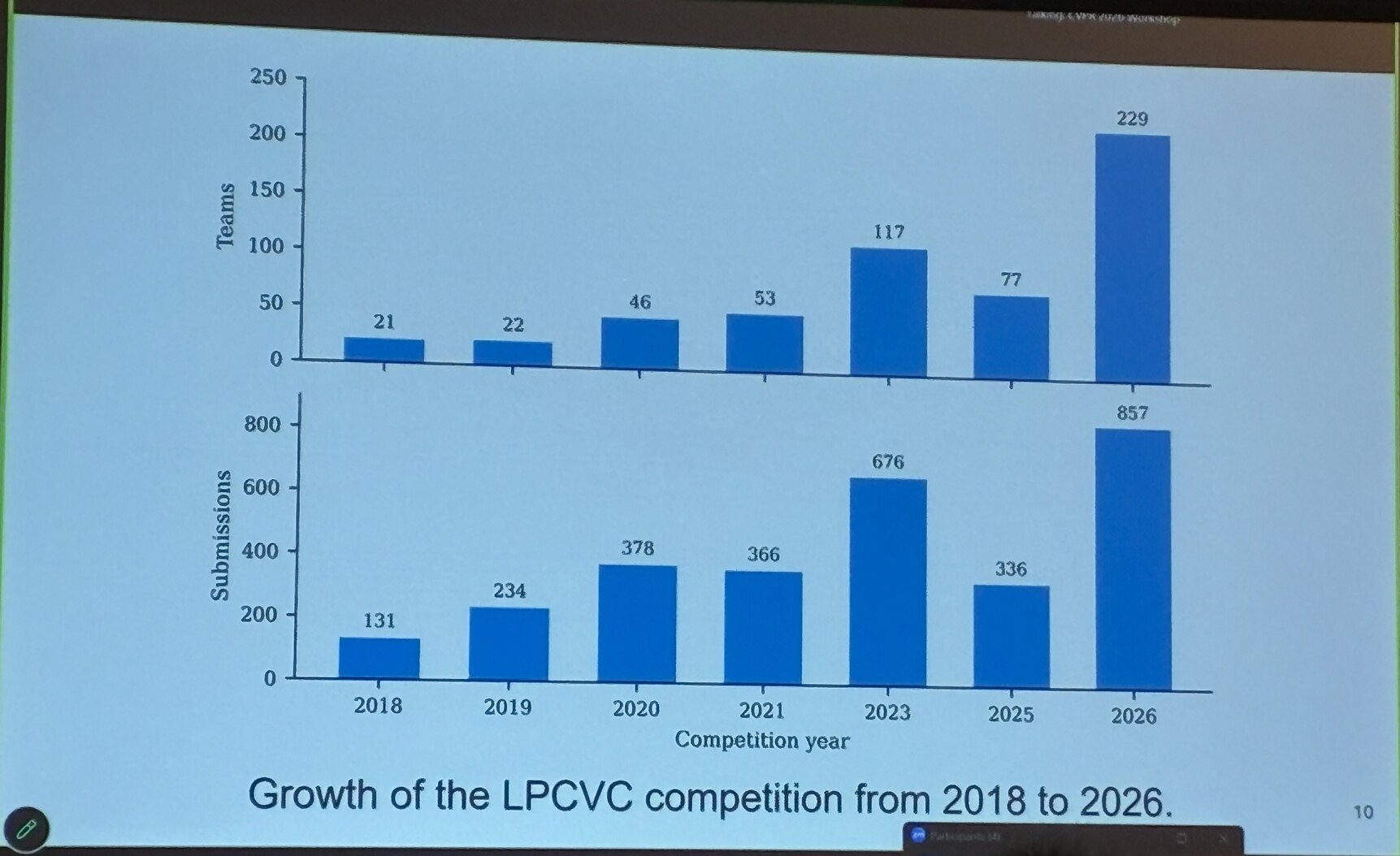
LPCVC 2026 attracted strong participation, with 229 teams competing across all tracks.
Solution
Our solution, DecomposedVideoMAE, is based on a Kinetics-710-pretrained VideoMAEv2 ViT-B(1). We decomposed its original Conv3d patch embedding into a Conv2d followed by a Conv3d, using SVD and MSE-based distillation to reproduce the original patch-embedding output. Training was performed in stages: the backbone was first frozen and then fully fine-tuned at 224px, after which logit and feature distillation transferred the model’s knowledge to a more efficient 112px student.
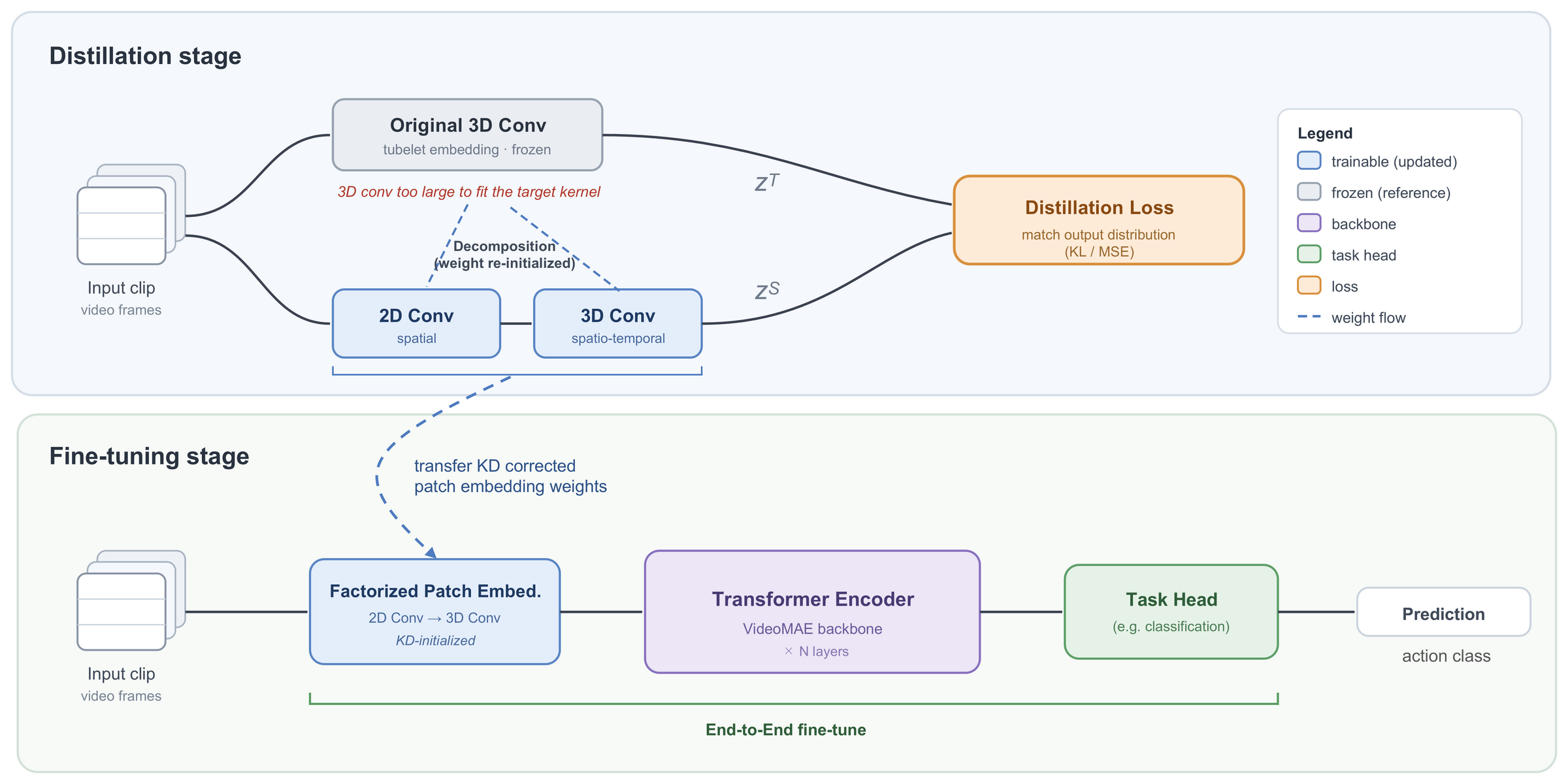
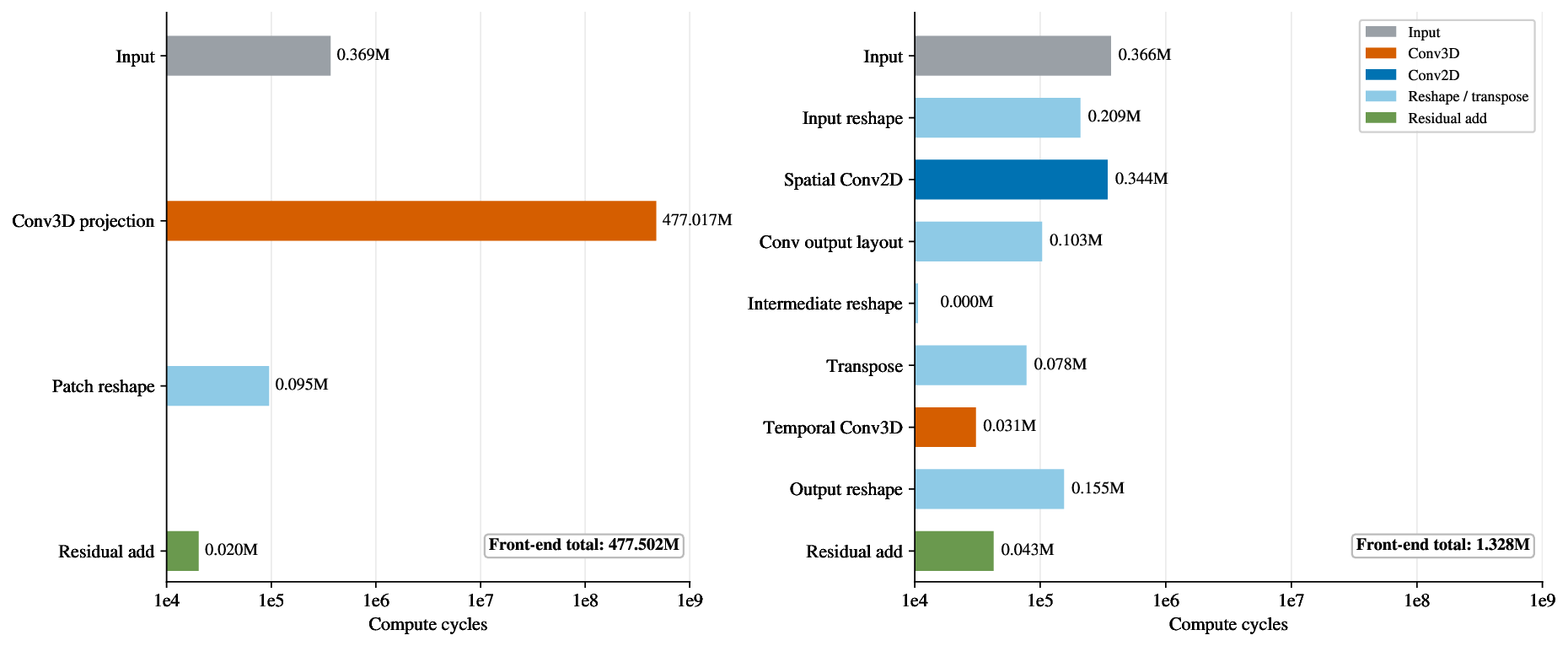
For the final fitting stage, the training and validation sets were combined, and selected student checkpoints were averaged using Model Soup. The exported model also applies mathematically equivalent deployment optimizations: input normalization is fused into the Conv2d weights, attention scaling is absorbed into the query and key weights, and the input uses the channel-last NTHWC layout. The resulting float model achieved 96.776% leaderboard accuracy with 19.322 ms latency on the Qualcomm Dragonwing IQ-9075 EVK.
Our public code is available here: